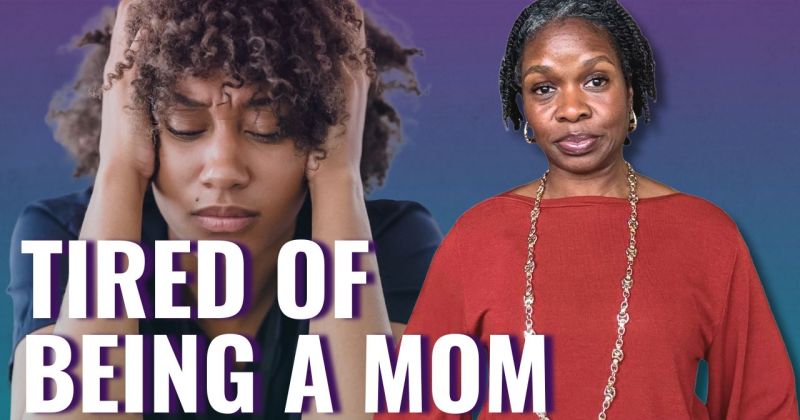

It’s Not the Tired You Think
Moms often whisper this confession under their breath: “I’m exhausted.”
But here’s the truth most mothers never get permission to say out loud:
You’re not tired of being a mom. You’re tired of carrying emotional weight so heavy it smothers your energy, your clarity, and your capacity to parent with confidence.
And no one told you that emotional buildup drains you faster than sleepless nights or school drop-off chaos ever will.
As someone who left a demanding medical career to raise my three children full-time—much of that as a military wife far from my own “village”—I understand emotional overwhelm at a cellular level. There was no help coming, and I had to learn to encourage myself louder than my nagging doubts.
So if you’ve ever wondered, “Where is the village everyone keeps promising?” I see you.
And here’s the truth folks won’t admit: most people are too stretched, too busy, or too detached to carry your load. And the ones who could help are often in a different life stage—or simply don’t want the responsibility.
So yes, sometimes motherhood feels like choosing between your sanity and your child’s needs. And the frustrations pile up until you finally mutter, “If it comes down to me or you, I’m picking me, kid.”
But here’s the reframe that will change everything: it’s not you or them. It’s you and them.
And that and is held together by boundaries.
Love Gives Boundaries—Always
We’ve normalized a culture that confuses love with permissiveness.
But genuine love—wise, mature, protective love—gives boundaries.
If a seven-year-old still can’t stay seated at a restaurant, that’s not a “behavior problem.” That’s a boundary problem. Boundaries that weren’t taught at two, three, or four show up as chaos at seven, twelve, and sixteen.
Boundaries teach identity.
Boundaries teach self-respect.
Boundaries teach social awareness.
You cannot raise a child to honor themselves or others if they have never experienced the dignity of structure.
And the irony? Boundaries actually create peace for your child. They create confidence. They create a sense of belonging.
Kids behave better when they feel better—and they feel better when they know someone loves them enough to guide them.
Family Dysfunction Steals Social Skills
When a home is chaotic, cold, or disconnected, children don’t learn how to be in healthy relationships. They lose what I call social mechanics—the ability to communicate, cooperate, resolve conflict, or build trust.
A child who feels unseen may become the “over-giver” desperate for approval…
or the hostile, withdrawn child who believes no one cares—so they stop caring too.
Either path is rooted in the same wound: a lack of connection at home.
And as they get older, these relational deficits turn into school problems, friendship difficulties, behavioral issues, and dangerous coping mechanisms.
Yes, some children need medication for chemical imbalances. But many children simply need emotional regulation modeled and taught within their home.
You Can’t Give Your Child What You’ve Never Received
This is where I speak to you as the mom who has lived it—not just the doctor who learned about it.
You cannot pour into your children from an emotionally empty well.
If no one taught you boundaries…
If no one listened when you were hurting…
If no one made room for your voice or your needs…
Then, you must do the work to feel safe in your skin while providing boundaries for your child to grow up safely in theirs.
Therapy helped me.
Journaling regulates me.
Prayer sustains me.
And I’ve written devotionals, prayer books, and journals for women who need language for the pain they’ve carried silently for too long—not as products to sell you, but as overflow from my own healing journey.
Because when you give your pain words—on paper or in prayer—it shrinks.
It becomes something you can handle instead of something that overshadows everything.
Your Emotional Health Is Your Parenting
Your child doesn’t need perfection. They need your presence.
But you can’t be present if you’re buried under emotional debris you never learned how to release.
So, make space for your emotions. Express what’s been stuffed down for years. Seek counseling if you need it.
Journal if you can’t find the words out loud. Pray if your spirit is too weary to stand on its own.
Do the inner work so you can give your child the gift of a regulated, emotionally available mom—and teach them how to do the same for themselves.
Your child wants you. But the healthiest version of you. And that begins with giving your own heart the boundaries, care, and compassion you’ve always needed.
I’m rooting for you!

If you have a comment, I’d love to hear from you. Please share it here.
**The views and opinions expressed should not be taken as medical advice. The content here is for informational purposes only, and because each person is so unique, please consult your health care professional for any health questions.
 Vanessa A. Harris